Cat Friendly Clinic: Gold Certificate
13. April 2026
Preparing for your appointment at the Vet Center Cologne
20. May 2026Cat Friendly Clinic: Gold Certificate
13. April 2026Preparing for your appointment at the Vet Center Cologne
20. May 2026
Medical Training – Stress-Free Vet Visits Through Voluntary Cooperation
For many animals, a visit to the vet is stressful: unfamiliar smells, strange touches, examinations, or painful procedures can trigger fear and anxiety. Some dogs or cats are difficult to examine, resist, or become extremely stressed. This is stressful not only for the animal itself, but often for the owners as well.
This is exactly where Medical Training comes in.
What is medical training?
Medical training refers to the targeted practice of medical or nursing procedures in everyday life or in preparation for visits to the veterinarian. Through this process, the animal learns, step by step, to allow certain examinations or treatments to be performed voluntarily and without stress.
These may include, for example:
- Touching the Paws
- Checking or Trimming the Claws
- Checking the EarsOhren anschauen
- Checking the mouthMaul kontrollieren
- Grooming
- Augentropfen geben
- Administer eye drops
- Lie calmly on the examination table
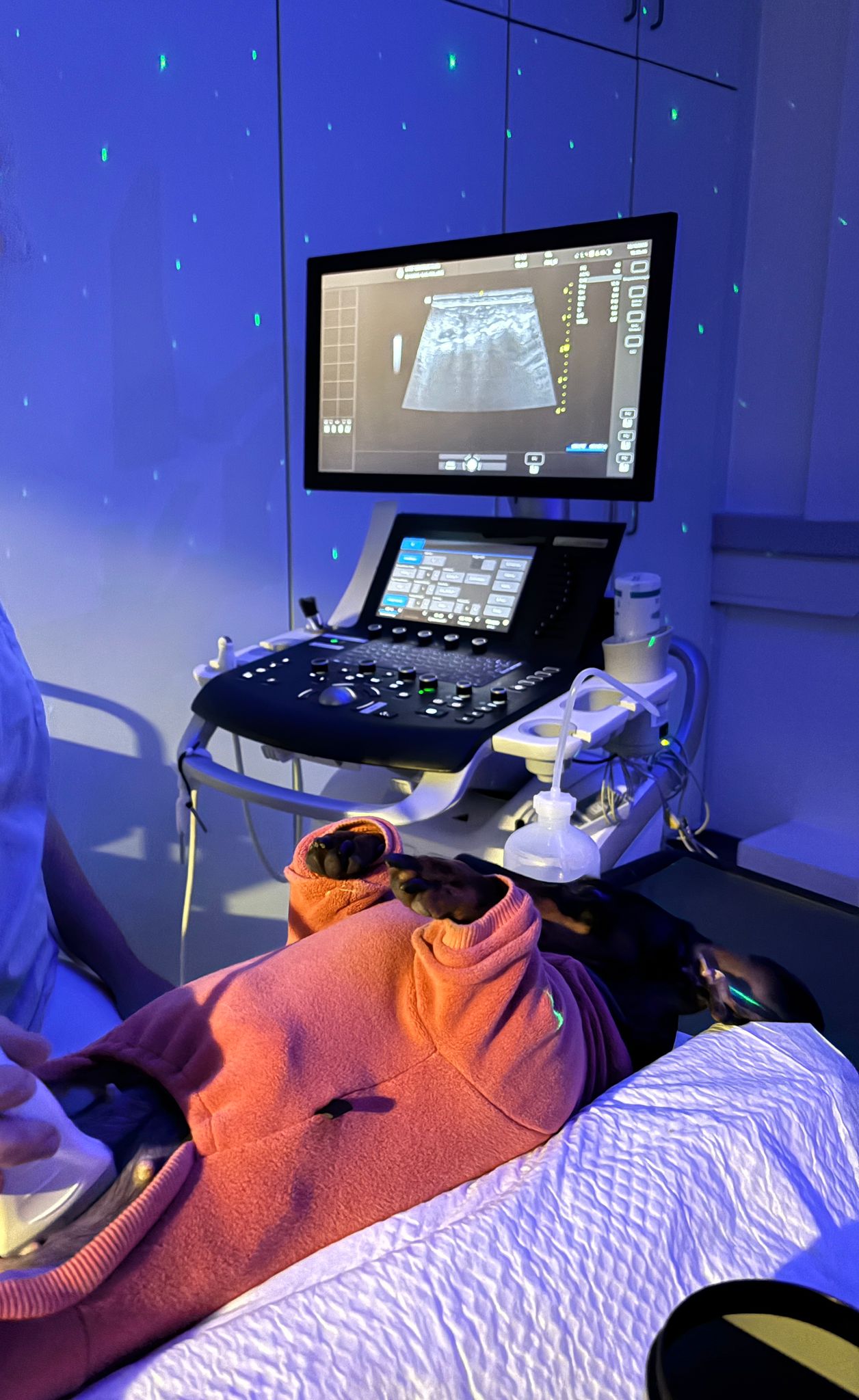
- Preparing for Ultrasound Examinations
The goal is for the animal not to perceive these situations as threatening.
Why is medical training so important?
When animals are afraid during examinations or resist strongly, stressful situations often arise for everyone involved. Examinations become more difficult, treatments are delayed, and in some cases, animals even have to be sedated.
Through medical training, an animal can learn:
- To tolerate being touched better
- medizinische Maßnahmen vorhersehbar zu erleben
- Building trust
- Actively participating
- Significantly reducing stress
Training can be useful both as a preventive measure for young animals and to help animals that have already had negative experiences.
Voluntary participation instead of coercion
An important component of medical training is what are known as cooperation signals.
Through these, the animal learns to actively show that it is ready for the next action. For example, a dog may lower its head or voluntarily give a paw.
This gives the animal a greater sense of control over the situation. This voluntary participation builds trust and significantly reduces stress.
Special situations can also be practiced
It’s not just routine examinations that can be practiced. Special situations can also be prepared for, for example:
- lying relaxed on an ultrasound mat
- staying calm in a transport crate
- Preparing for blood draws
- Changing bandages
- Inhalations
- Medikamentengabe
The earlier an animal has positive experiences, the easier it is to implement medical procedures later on.
For which animals is medical training suitable?
Medical training is generally suitable for all animals—regardless of age or history.Medical Training ist grundsätzlich für alle Tiere geeignet – unabhängig von Alter oder Vorgeschichte.
It is particularly helpful for:Besonders hilfreich ist es bei:
- insecure or fearful animals
- animals with negative past experiences
- chronically ill animals
- animals that require regular treatment
- puppies and young animals for preventive care
Cats also often benefit greatly from targeted training.
We’re happy to support you
If visits to the vet are difficult for your pet, or if you’d like to prepare your pet for checkups in advance, we’re happy to help.
Our behavior therapist, Antonia Knaack, will provide personalized guidance to help you make vet visits more relaxed.
If you have any questions or would like to schedule an appointment, please feel free to send us a message.